

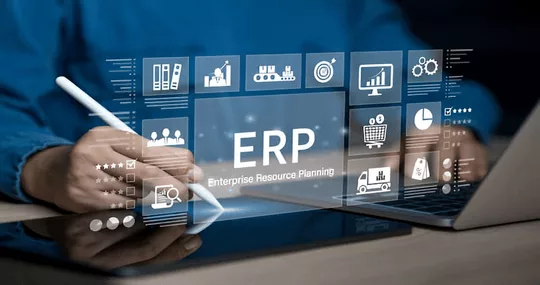
What is ERP?
Enterprise Resource Planning (ERP) is one of the most important systems modern organizations rely on to run their daily operations efficiently. Whether you are managing a small business or a global enterprise, ERP solutions help bring structure, visibility, and control to complex business processes.
This article explains what ERP is, how ERP in business works, and why organizations across industries depend on ERP systems.
What is ERP?
ERP (Enterprise Resource Planning) refers to a type of software that organizations use to manage and integrate their core business processes into a single, unified system. These processes typically include finance, accounting, human resources, supply chain, procurement, manufacturing, sales, and customer management.
Instead of using disconnected tools for each department, ERP provides a centralized database and shared workflows. This allows teams to access real-time data and work from a single source of truth. According to Oracle, ERP acts as the system that “keeps the lights on” by supporting essential business operations across the organization.
How ERP Systems Work
ERP systems collect data from different departments and store it in one centralized platform. Each module focuses on a specific business function, but all modules are connected.
For example:
- A sales order automatically updates inventory levels.
- Financial records are updated in real time.
- Procurement can see demand forecasts from operations.
SAP explains that this integration helps organizations reduce duplication, eliminate errors, and improve decision-making by providing consistent and accurate information.

“ERP is not just software; it is the brain that connects business operations and turns data into smart decisions.”
Key Components of ERP Systems
Most ERP solutions include the following core modules:
- Finance and Accounting – general ledger, budgeting, reporting
- Human Resources (HR) – payroll, recruitment, employee records
- Supply Chain Management – inventory, logistics, procurement
- Manufacturing – production planning, quality control
- Sales and Customer Management – orders, invoicing, CRM
Microsoft highlights that ERP systems are designed to scale, allowing businesses to add or remove modules as their needs grow.
ERP in Business ..
Why It Matters?
Using ERP in business is not just about automation; it is about strategic control. ERP systems help organizations:
- Improve operational efficiency
- Reduce manual work and errors
- Gain real-time visibility into performance
- Support data-driven decision-making
- Ensure compliance and reporting accuracy
IBM emphasizes that ERP systems are essential for connecting people, processes, and technologies across the enterprise.
Benefits of ERP Solutions
ERP solutions deliver value across multiple dimensions:
- Centralized data – one system, one version of the truth
- Better collaboration – departments work together seamlessly
- Cost savings – reduced inefficiencies and manual processes
- Scalability – systems grow with the business
- Business insight – analytics and reporting for smarter planning
Thomson Reuters notes that ERP systems are especially important for financial control, compliance, and risk management in today’s complex business environment.
Cloud vs On-Premise ERP
Modern ERP solutions are increasingly cloud-based. Cloud ERP offers:
- Lower upfront costs
- Automatic updates
- Remote accessibility
- Faster deployment
However, some organizations still choose on-premise ERP for greater control or regulatory reasons. The choice depends on business size, industry, and security requirements.
ERP is more than just software; it is the digital backbone of modern organizations. By integrating processes, improving visibility, and enabling smarter decisions, ERP solutions help businesses operate efficiently and scale confidently. Understanding ERP in business is essential for any organization looking to compete in today’s data-driven world.

{{page.totalItems}} Comments